

What you will accomplish
You will know which tool to use when a customer invoice needs to change after it was created—void, issue credit note, or edit invoice—and how to complete each step without duplicate charges or a broken payment link. Use this guide when:- The wrong amount, customer, or line items were sent
- The customer paid by cash or check and you need to remove processing fees from the balance
- A customer should not pay an invoice anymore (duplicate bill, canceled service, wrong month)
- Your manager asked you to fix a finalized invoice instead of creating a brand-new bill from scratch
Customer invoices onlyThis guide is for bills your facility sends to customers. Vendor bills from outside providers use a different workflow—see Review and pay vendor invoices.
Before you start
- You can open Payments > Invoices and find the invoice using Filters → Type → Customer.
- You know the invoice status (Draft, Open, or Paid)—see Review a customer invoice.
- You know what went wrong (wrong amount, wrong customer, duplicate bill, customer already paid another way).
- Your manager approved voiding, crediting, or editing if your team requires sign-off.
Choose the right fix
Not every mistake uses the same button. Pick the option that matches what should happen next.Void invoice — Cancel the invoice completely. The customer can no longer pay it. Use when the whole bill should disappear (duplicate invoice, wrong customer, service canceled before payment).Issue credit note — Lower the amount still owed on an Open invoice without canceling the whole bill. Use when part of the charge should come off (processing fees after cash/check payment, partial goodwill credit, small correction).Edit invoice — Change line items on a finalized invoice. The system voids the old invoice and creates a new draft with your fixes. Use when descriptions, quantities, or totals need to change and you plan to send a corrected bill.
Open the invoice you need to fix
1
Go to Payments > Invoices
Sign in to your dashboard. In the left sidebar, click Payments, then Invoices. You can also open Payments > Invoices directly.Expected result: You see the Invoices page with tabs such as All, Customer, and Vendor.
2
Filter to customer invoices
Click Filters. Under Type, choose Customer.Why this matters: The Vendor filter is for bills your facility receives from outside companies. Stay on Customer for customer corrections.
3
Find and open the invoice
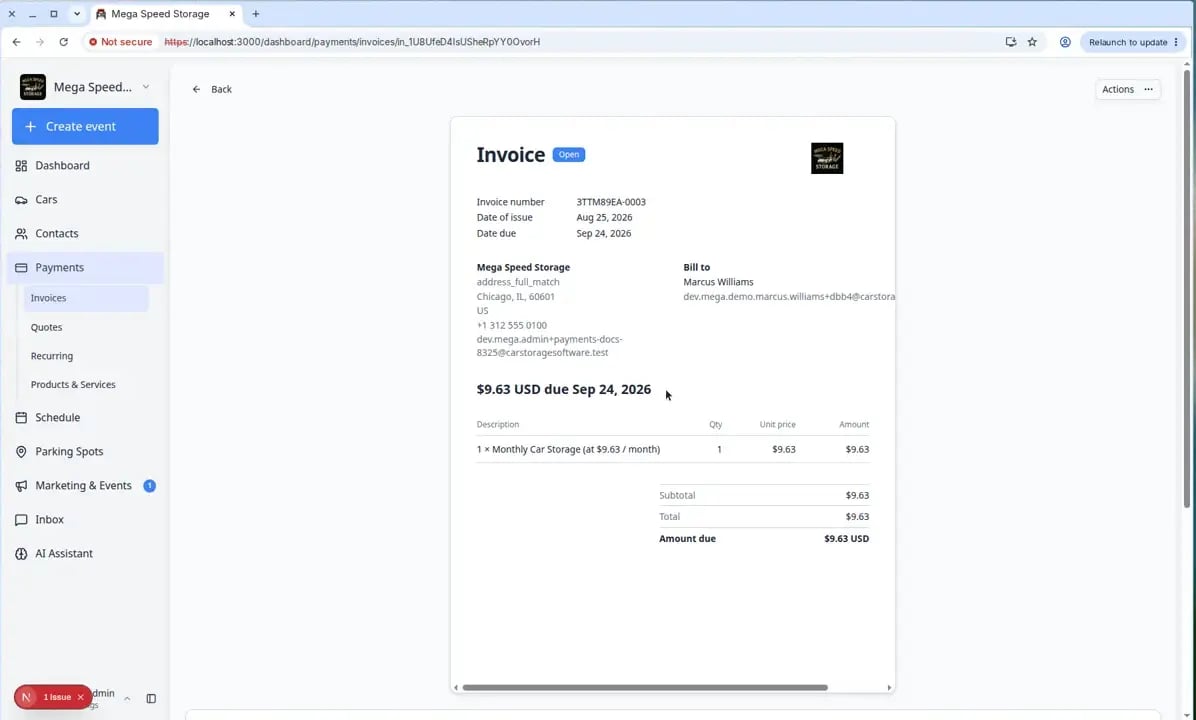
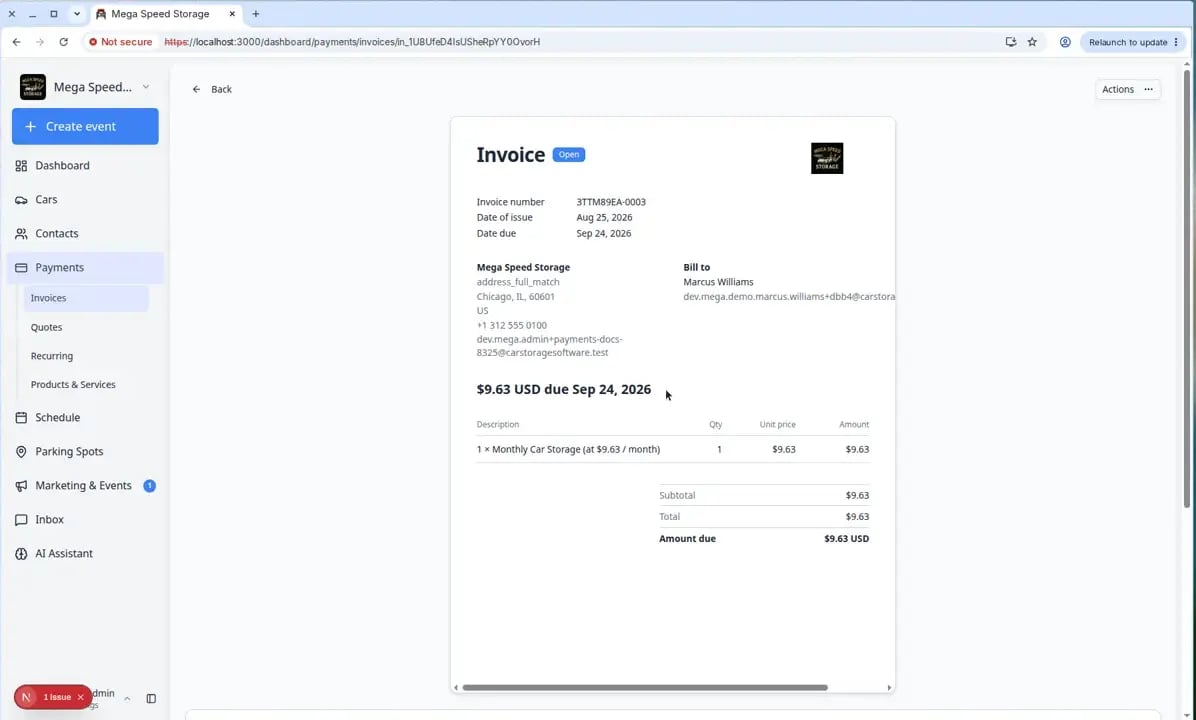
Search by customer name, email, or invoice number if needed. Check the Status column, then click the invoice row.Expected result: The invoice detail page opens with the customer name, Status badge, amount due, and Actions on the right (for open invoices).
Fix a draft before anyone pays
Drafts are the safest time to catch mistakes—nothing has been sent to the customer yet.1
Open the draft invoice
With Filters → Type → Customer selected, click a row with Draft status.
2
Review line items and total
Scroll through each line. Fix descriptions, quantities, tax, or due date on the page if your role allows editing.Why this matters: Changes on a draft do not affect the customer until you finalize.
3
Delete if the draft is not needed
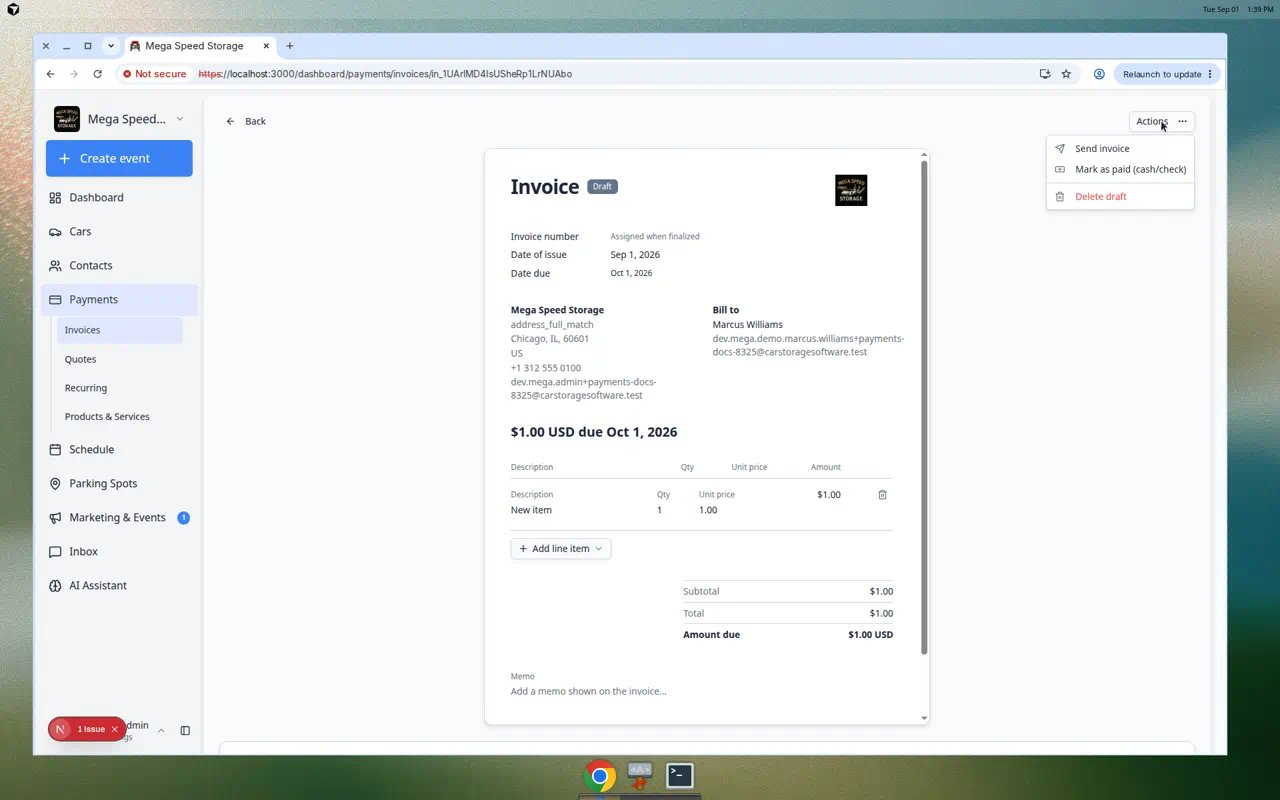
Click Actions, then Delete draft if the whole invoice was created by mistake.Expected result: The invoice disappears from the list.
4
Finalize when correct
Click Finalize invoice when the bill is ready to send or charge.Expected result: Status becomes Open or Waiting for customer.
Void an invoice
Use Void invoice when the customer should not pay this bill at all.1
Confirm the invoice is Open
Void invoice appears when status is Open. You cannot void a Draft (delete the draft instead) or a Paid invoice (ask your manager about refunds or credits).Expected result: Status badge shows Open.
2
Open Actions
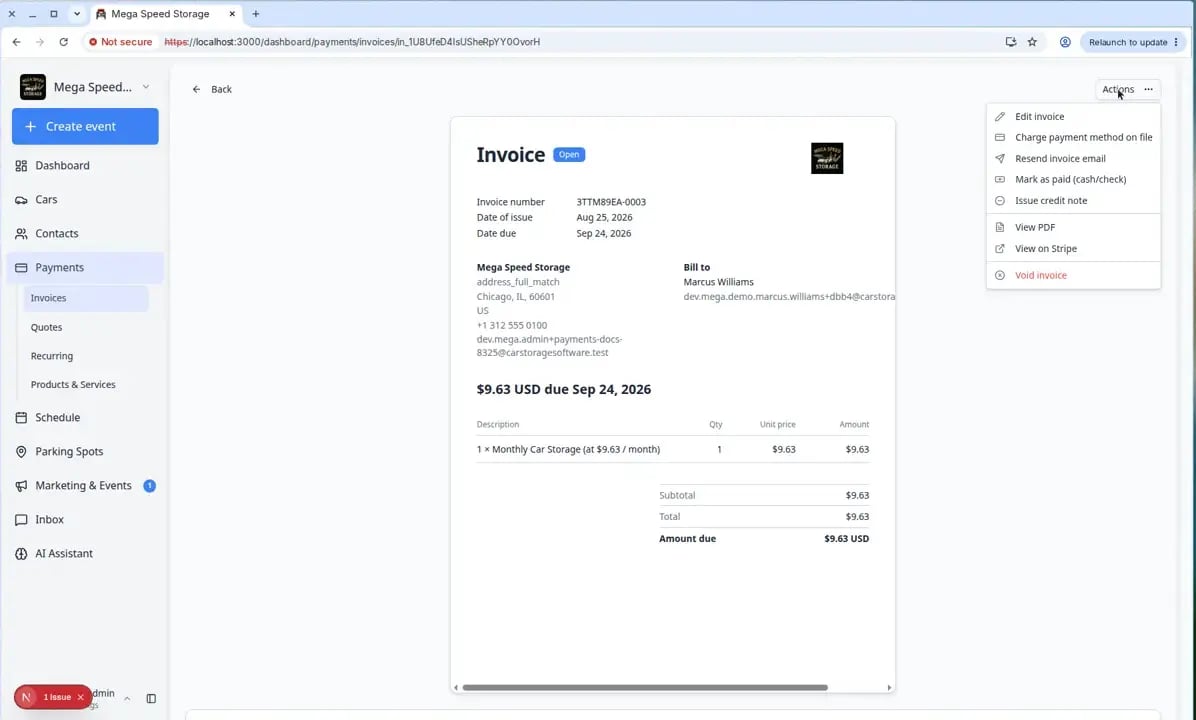
Click Actions in the top-right area of the invoice detail page.
3
Choose Void invoice
Scroll to the bottom of the menu and click Void invoice (red text).Why this matters: Voiding tells the system this bill is canceled. The customer’s old payment link will stop working.
4
Read the confirmation window
A window titled Void this invoice? appears. Read the warning: the customer can no longer pay this invoice, and voiding cannot be undone.Add an optional Reason for voiding (for example Duplicate of INV-1042).
5
Click Void invoice to confirm
Expected result: Status changes to Void. The invoice stays on the list for your records but can no longer be paid.
Issue a credit note
Use Issue credit note when the invoice should stay open but the amount due should go down.1
Open an Open invoice
From Payments > Invoices (Filters → Type → Customer), open the invoice with Open status.
2
Open Actions and choose Issue credit note
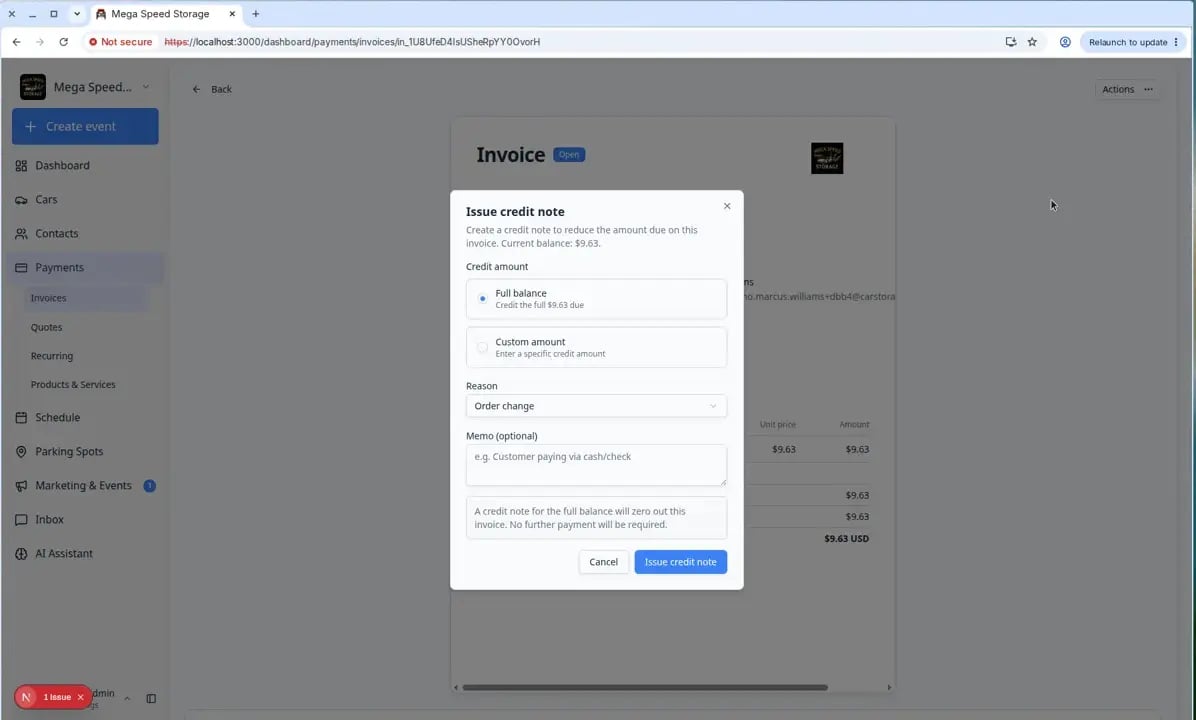
Expected result: A window titled Issue credit note opens showing the current balance.
3
Choose the credit amount
Pick one option:
- Processing fees only — Removes card processing fees (common after cash or check payment).
- Full balance — Credits everything still owed on the invoice.
- Custom amount — Enter a specific dollar amount (cannot exceed the balance).
4
Save the credit note
Click Issue credit note.Expected result: The amount due drops. Resend the invoice if the customer needs to see the new balance—see Send and collect customer payments.
Credit note vs account creditIssue credit note applies to this invoice. A separate Issue credit tool on the customer’s Contacts record adds money to their account balance for future invoices. Ask your manager which one your facility uses.
Edit a finalized invoice (void and recreate)
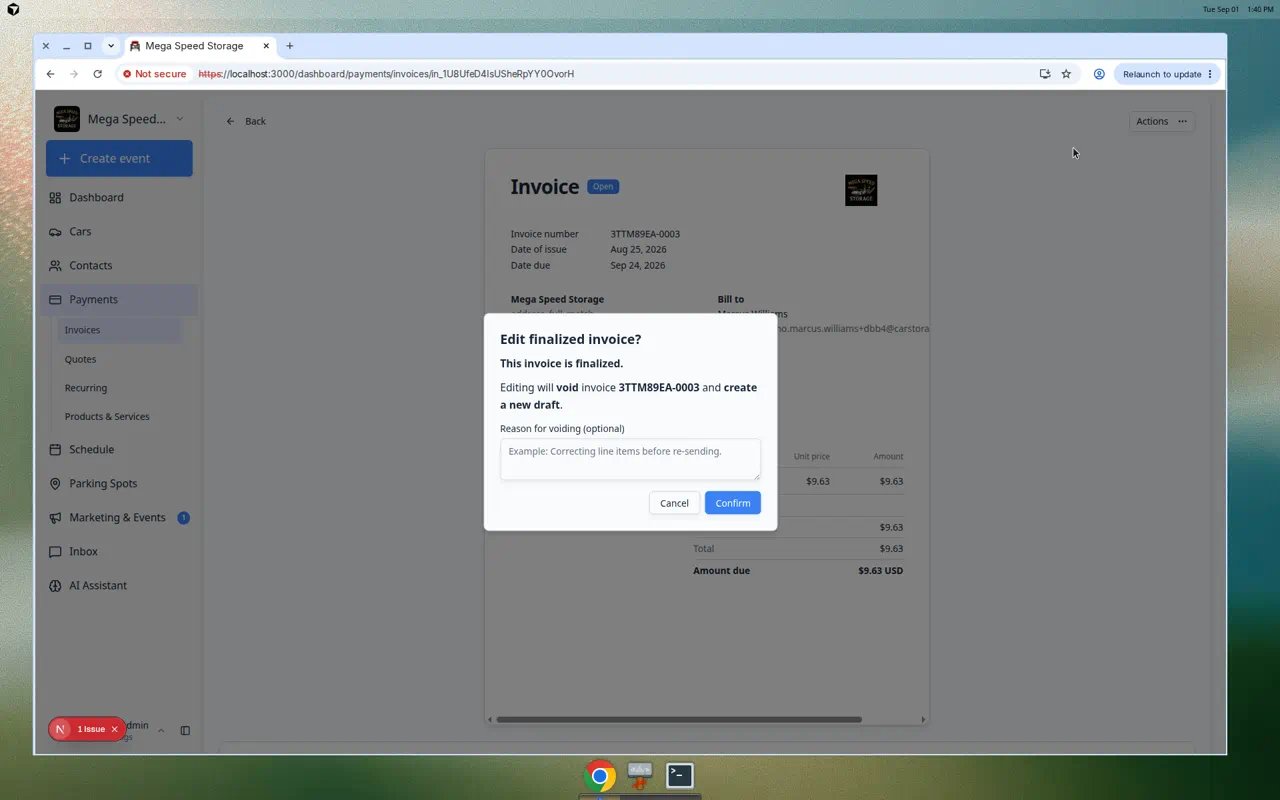
Use Edit invoice when line items, quantities, or descriptions need to change and you want a new draft built from the current bill. Important: The system voids the current invoice and creates a new draft you must review and finalize again.1
Open Actions and choose Edit invoice
On an Open invoice, click Actions, then Edit invoice.Expected result: A window titled Edit finalized invoice? explains the old invoice will be voided.
2
Click Confirm
Add an optional void reason, then click Confirm.Expected result: You land on a new Draft invoice. The old invoice status becomes Void.
3
Fix the draft and finalize again
Update line items and totals. Click Finalize invoice, then resend so the customer gets the corrected bill.Expected result: A new Open invoice replaces the voided one.
Common mistakes to avoid
- Do not void an invoice the customer already paid without manager approval.
- Do not create a second open invoice for the same job without voiding or crediting the first one—customers may pay twice.
- Do not skip telling the customer when voiding and sending a replacement bill.
- Do not use Issue credit note when you meant to void the entire invoice.
Troubleshooting
What to do next
- Invoice is correct and unpaid → Send and collect customer payments
- Need a brand-new bill → Create an invoice
- Month-end totals → Review the Invoices Report